Cavity Wall Ties

Watertight Homes Ltd specialises in enhancing and maintaining both residential and commercial properties, providing homeowners and businesses with reliable solutions to improve and preserve their spaces effectively.

What are Cavity Wall Ties?

Cavity wall ties, also known as brick ties, are metal strips designed to bond the outer and inner walls of a house together. Cavity wall ties are hidden from view after construction, but play a crucial part in ensuring the structural stability of a building. 

Sometimes the ties deteriorate, due to rust or corrosion, and the bond, between the wall layers, weakens, causing the inner and outer layers to bow away from each other. Cavity wall ties may also be poorly installed, or insufficient to ensure structural integrity. This can be a dangerous situation and requires immediate action to save the wall from collapsing.

What causes Cavity Wall Ties?

We offer cavity wall tie replacement in Leeds, Harrogate, Yorkshire, Manchester, Huddersfield and Wakefield.

Often, older properties feature cavity wall ties without a protective coating, leading to deterioration over time. If this happens, the wall ties may corrode, leading to wall instability. Additionally, corrosion may cause expansion of the wall, creating horizontal cracks along the mortar joints.

This occurs through a process known as lamination, characterised by the cavity wall ties doubling in size. When lamination happens, the building instantly becomes unstable, with the mortar joints lifting from their original location. This may lead to deformation in shape and an inhabitable property. There may also be too few cavity wall ties used per square metre. A minimum of two and a half wall ties are normally needed per square metre of wall. If you are concerned about your cavity wall ties, get in touch with us today.

20+ Years of Expertise

Comprehensive Services

Guaranteed Quality Work

Accredited & Approved

Step 1:
Contact Us

Reach out by phone, email, or fill out our contact form.

Step 2:
Consultation

Schedule a consultation for personalised advice and accurate measurements.

Step 3:
Installation

Enjoy professional installation by our expert fitters, with work guaranteed.

Accreditations, Awards, Certificates

Watertight Homes is BBA accredited and Triton approved, demonstrating a commitment to high standards. Our services are backed by a 10-year guarantee for quality assurance.

Our Reviews

Watertight Homes boasts 5-star ratings on Which?, reflecting exceptional customer service, quality, and value. Clients appreciate their reliability, professionalism, and successful project outcomes.

Outstanding from beginning to end.

Frequently Asked Questions

At Watertight Homes, we answer common questions about our services, industry experience, guarantees, and how we address issues like damp, rot, and woodworm infestations.
Cavity wall ties are usually manufactured using triple zinc coating on a stainless steel tie. Originally, cavity wall ties were made from terracotta, wrought iron or cast iron. Most buildings constructed after the 1920s feature cavity walls. Cavity walls provide greater thermal insulation than solid walls, as the space in between them reduces heat transmission into the building from outside. They are also cheaper than solid walls. During construction, cavity wall ties are inserted at regular intervals in a diamond pattern to form a bond between the two walls.
The new cavity wall ties are made from stainless steel and are inserted into the brickwork, through drilled holes, or by removing individual bricks, at set intervals. The new wall ties are secured to the inner and outer wall using polyester or epoxy resin.
 

The existing wall ties must be isolated from the outer leaf in order to prevent them from corroding any further and causing more damage.

The isolation works are carried out by locating the original wall ties with a specially calibrated metal detector, opening up the mortar joints at the tie location area, and then physically removing or encapsulating the tie ends.


With nearly 25 years in the industry, you can trust us to provide exceptional service every time. We’ll carry out a site inspection, report findings and provide comprehensive estimated costs for any work we think needs to be carried out. Our team of experts will support you throughout the process, from initial consultation to aftercare. We provide high-quality, cost-effective solutions. All of our surveyors and engineers are accredited and work in line with building regulations.

Everything we do is covered by a ten-year guarantee – a testament to the confidence we have in our work. We also offer our clients a ten-year insurance backed bonded guarantee, which is available from our suppliers at a small extra charge.

Predominantly, we operate in Harrogate, Manchester, Wakefield, Leeds, Yorkshire and Huddersfield, but now cater to a nationwide client base.

Used in construction since the beginning of the 20th century, cavity walls were designed to improve thermal insulation and provide better protection from the elements. Cavity wall systems are comprised of two distinct walls; the internal and external walls These walls are tied together at intervals with cavity wall tie to form a homogenous wall unit.

The price of replacing cavity wall ties is dependent on the cavity width, the size of the wall, and how many cavity wall ties are required to stabilise it. Cavity wall ties are usually placed at a maximum of 900mm x 450mm intervals. A minimum of two and a half wall ties are needed per square metre of wall. The tie length will depend on the width of the cavity between the two walls.

There are several ways to determine cavity wall tie failure, even without the services of a professional surveyor. In the case of a wall tie corrosion, the wall may bulge outwards. This is caused by the widening of wall joints and is particularly noticeable around window frames. Visible cracks may appear in the outside wall. These cracks will appear at regular intervals along the wall. Cracks may also appear in the internal wall, render coats and ceiling joints.

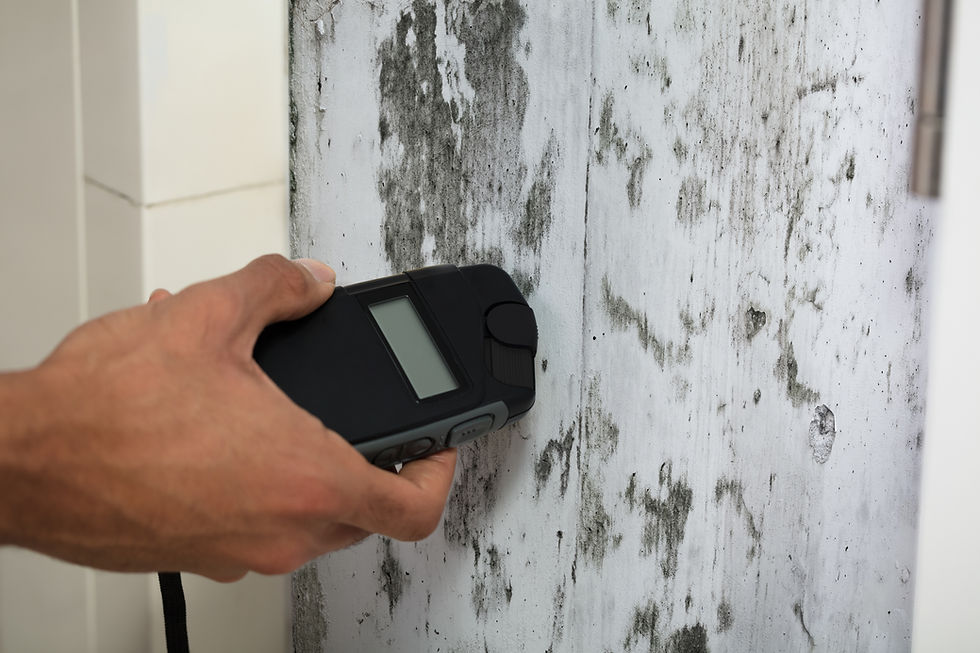
To confirm the erosion of cavity wall ties, we carry out a survey. A metal detector is used to locate the number of cavity wall ties used in each wall. We make a series of holes in each wall using a drill. An endoscope is then used to inspect the cavity wall tie. Often, corrosion or delamination is immediately evident. If further confirmation is required, we will expose the outer end of the tie by removing the mortar surrounding it.

Case Studies

Watertight Homes showcases successful projects, including cavity wall tie repairs, woodworm treatment, and basement conversions, demonstrating expertise and providing real-world solutions for clients.

Recent Articles

Our articles offer expert insights into property care, covering topics like damp proofing, basement conversions, and timber preservation, helping you stay informed about our services.

Get in touch with us

Contact Watertight Homes today for a consultation or to request a quote. Our team is ready to assist with all your property care and preservation needs.

Contact Us

Contact Watertight Homes today for a consultation or to request a quote. Our team is ready to assist with all your property care and preservation needs.
Watertight Homes Ltd

2 Sandringham Drive, Tingley, Wakefield, Yorkshire, WF3 1FF

Office: 0113 414 1329
Mobile: 07843099906

Email: watertighthomes@yahoo.co.uk